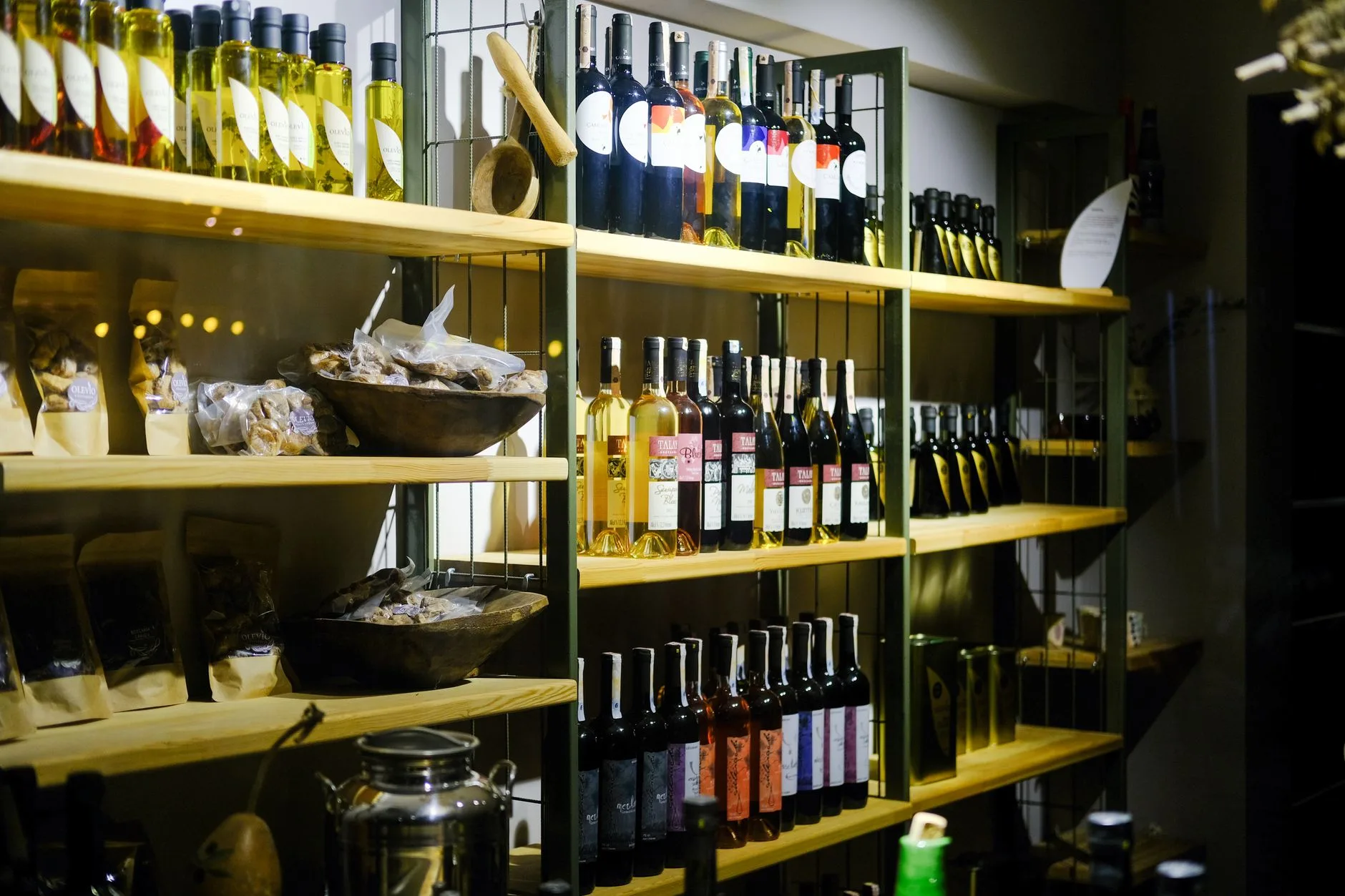
Buying wine online is not a superior version of buying from a shop. It is a different transaction. The useful comparison is not convenience against inconvenience. It is range and records against inspection and immediate judgement.
Both routes can work well. Both can also make it easy to buy wine for the wrong reason. The decision improves when the buyer knows which information is available before paying, and which information disappears once the order is placed.
Online buying gives range, records and time
A website can put many bottles, formats and regions in one place. That matters when the requirement is narrow: a particular grape, a dry style, a large format, a case for a cellar, or wine from a less common region. A physical shop has finite shelves. An online list may be much broader.
Online ordering also leaves a trail. Product details, order confirmations and previous purchases can be checked later. That record is useful when a bottle works well and needs to be found again, or when a mixed order needs to be assessed after it has been opened over time. It is also useful for avoiding accidental duplication.
The screen gives time to compare like with like. A buyer can check bottle size, whether the item is a single bottle or a case, the stated origin, the grape or blend, sweetness indication where given, alcohol level, and delivery terms. There is no pressure to make a decision while standing in an aisle.
But an online listing is only as clear as its details. Descriptions often tell a story about mood, food or place while leaving out the practical points. “Rich”, “smooth” and “easy” are loose terms. They do not establish how sweet a wine is, how much oak influence it has, or whether it is intended for early drinking or longer keeping.
Before placing an online order, check these points:
- Is the bottle size stated clearly?
- Is the wine identified by its full name, origin and vintage where applicable?
- Does the listing say whether a pictured bottle is illustrative rather than the exact item supplied?
- Is the stock status clear, or is the wine being offered subject to later confirmation?
- Are delivery timing, charges, minimum order rules and failed-delivery arrangements stated?
- What is the process if an item arrives damaged, incorrect or not as described?
Those questions are not fussy. They establish what is actually being bought and what happens if the transaction does not go as planned.
A shop gives physical checks and live context
A shop offers information that cannot be fully reproduced on a product page. The bottle is there. The buyer can read the label without relying on cropped images, check the closure, inspect the fill level, see whether the capsule is intact, and assess whether the bottle has obvious damage. None of these checks guarantees that a wine will be sound. They are still worth making.
The shop also shows how the wine has been kept at the point of sale. Look for direct light, excessive warmth, dusty bottles in a sunny window, or bottles stacked where they are likely to be knocked about. A single bottle does not reveal its whole history, but poor current conditions are a reasonable reason to pause.
There is another advantage: the conversation can respond to what is physically available. If the first choice has gone, a good discussion can move from a label to a style. That is more useful than being pushed toward the nearest bottle at the same shelf position.
The limitation is obvious. The choice is bounded by that shop’s range on that day. It may not have the format, region or quantity required. A shop may also be busy, and not every member of staff will have the time or knowledge to discuss wine in detail.
Use a shop visit to ask concrete questions rather than broad ones. Ask:
- Which bottles here are dry, and which have noticeable sweetness?
- Which options are lighter in body, and which are fuller?
- Is there a difference in style between these two wines made from the same grape?
- Has this bottle been stored away from light and heat?
- If this is unavailable, what is the closest alternative in style rather than simply in colour or price?
- Can the receipt be kept with the bottle if it is intended for later use?
A useful answer should contain a reason. “This is similar” is not enough. Similar in acidity, weight, sweetness, oak, tannin, or intended use are meaningful distinctions.
The weak point in each route is different
Online buying can create false confidence. A polished page makes every bottle look equally available, equally well described and equally suitable. It may not be. Do not treat a long description as evidence of precision. Look for the details that can be checked.
Shop buying can create false urgency. A bottle in hand feels like a decision waiting to happen. It is not. There is no obligation to substitute blindly because the intended bottle is absent. If the replacement cannot be described clearly, leave it.
Neither route removes the need to define the job. A bottle for a quiet weeknight meal, a gift, a large gathering, a cellar, or a restaurant list is not the same purchase. The useful starting points are format, timing, food, preferred style, storage period and quantity. Once those are clear, channel choice becomes simpler.
Use online buying when breadth, repeat ordering and a written record matter most. Use a shop when physical condition, immediate availability and a live comparison matter most. For either route, keep the order confirmation or receipt, note what was opened, and record the full bottle details. The next decision will then rely on more than a vague memory of a label.