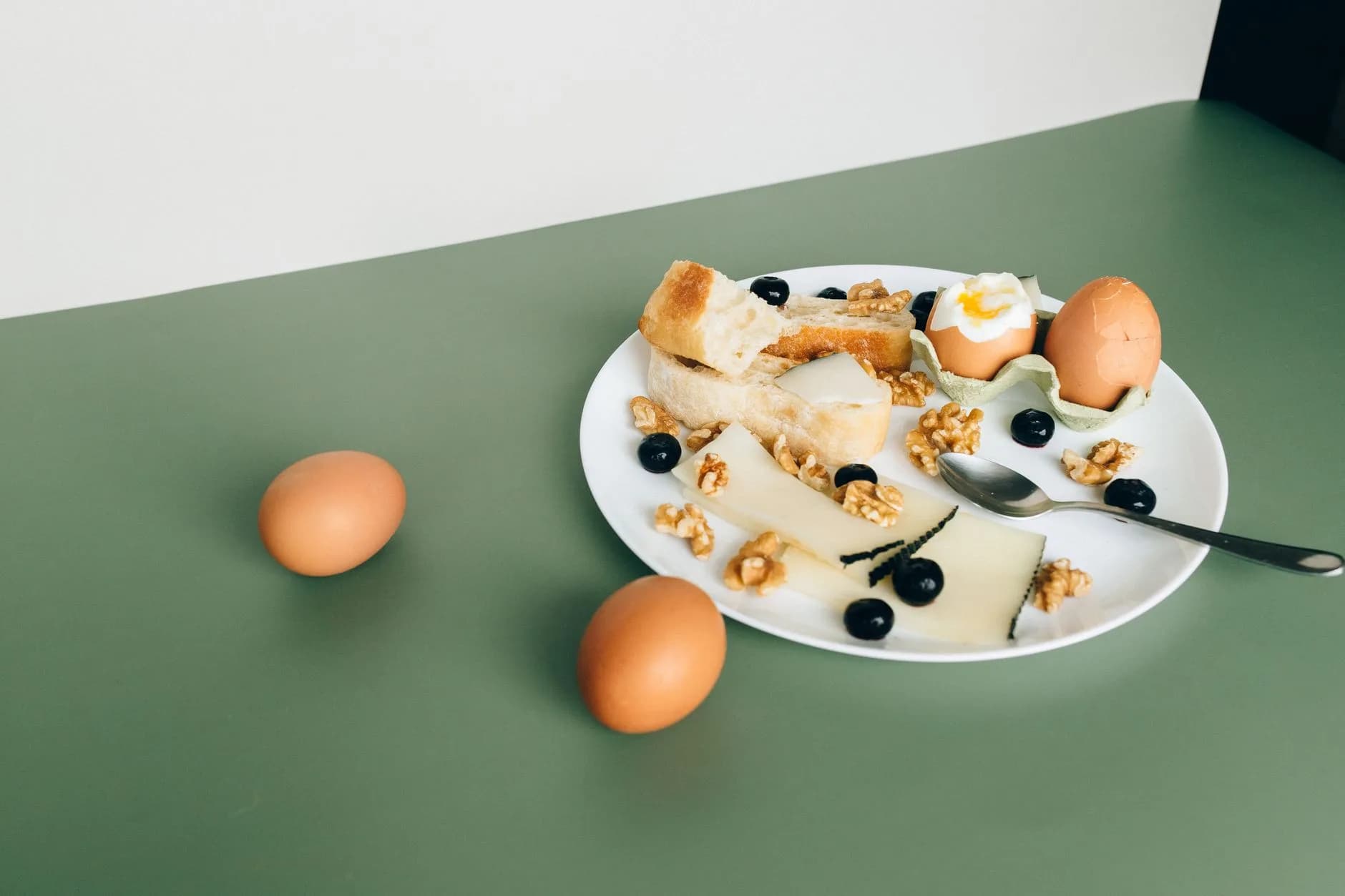
Photograph by Nataliya Vaitkevich on Pexels
Eggs make wine pairing harder than their mild flavour suggests. The yolk is rich, the white is soft, and cooked egg has a distinct savoury note that can make firm tannin or heavy oak seem clumsy. Brunch complicates matters further. It often combines eggs with butter, cured meat, herbs, tomato, smoke, chilli, sweet pastries and coffee.
Sparkling wine can be good at brunch. It is not, however, a category-wide answer. Treat the egg dish as the starting point, then account for the strongest additions on the plate. That produces better choices than opening bubbles simply because the meal began late in the morning.
Soft eggs need restraint, not force
Poached eggs, fried eggs with a runny yolk, and soft scrambled eggs call for wines that do not impose themselves. A dry, still white with modest alcohol, little or no obvious oak, and no tannic grip is usually the sensible place to begin.
The reason is texture. Soft egg dishes have no crunch, char or dense meatiness to push back against a powerful wine. A broad, heavily wooded white can bury the dish. A structured red can leave a drying, slightly metallic impression after the egg. This is not a place for a wine selected because it is expensive, famous or emphatic.
Look for a white made in a direct style. Unoaked or lightly oaked chardonnay can work. So can dry styles of chenin blanc, pinot blanc, verdelho, garganega or similar white grapes when the wine is not overly perfumed or sweet. The exact grape matters less than the shape: dry, clean, moderate in strength and not dominated by wood.
Keep the serving temperature sensible. A very cold white loses flavour and feels hard beside warm eggs. Take it from the refrigerator shortly before the food is ready rather than pouring it ice cold.
For a plain egg dish, resist adding complexity through the wine. The plate is already delicate. The useful choice is the one that leaves room for it.
Butter, cream and cheese change the requirement
Once eggs are folded with butter, topped with hollandaise or baked with cream and cheese, a more textured white becomes useful. The dish now has enough richness to meet a wine with a little breadth.
This is where a fuller dry white can earn its place. A chardonnay with restrained barrel influence, a white blend with some roundness, or a white that has spent time on its lees can sit comfortably beside creamy scrambled eggs, a cheese omelette, a quiche or eggs Benedict. The point is not to seek a flavour match for butter. It is to choose a wine with enough presence that it does not disappear after the first mouthful.
There is still a limit. Strong vanilla, toast or overtly smoky oak can turn a buttery egg dish into a contest between two rich things. Choose texture over obvious barrel flavour.
Sparkling wine also belongs here, particularly with hollandaise, but it is one option rather than a rule. Its bubbles provide contrast to the sauce and its dry finish keeps the plate from feeling heavy. A still white with similar balance may be just as good, especially when the dish includes mushrooms, spinach or a substantial pastry case.
A practical check is simple: identify whether the richness comes from yolk alone or from added butter, cheese and cream. Yolk alone asks for restraint. Added richness permits more wine texture.
Tomato, herbs and vegetables can move the wine away from white
Eggs often arrive with ingredients that speak louder than the eggs themselves. Tomato, peppers, green herbs, onions, mushrooms and leafy vegetables all change the choice.
Eggs baked in a tomato and pepper sauce need a wine that can cope with savoury tomato and the occasional trace of chilli. A dry rosé is often a sound answer, especially when it has enough flavour to stand up to the sauce without becoming tannic. A light, low-tannin red served slightly cool can also work where the dish is more savoury than fiery. Avoid reds that are dense, drying or noticeably woody. Tomato and forceful tannin are a poor combination.
Herb-led omelettes and egg dishes with greens generally favour dry whites with a herbal or stony edge, or a restrained rosé. The wine need not taste of the same herb. It simply needs to avoid sweet fruit and weighty oak, both of which can make fresh green flavours seem dull.
Mushrooms are a useful exception. Their earthy, savoury character can support a light red with gentle tannin, particularly when the eggs are baked, folded into an omelette or served on toast. This is one of the few egg breakfasts where a red can feel natural rather than contrarian.
Make the choice from the dominant vegetable: tomato suggests rosé or a light red; leafy herbs suggest a direct white; mushrooms allow a gentle red. That is more reliable than treating every egg dish as identical.
Do not make one bottle solve sweet and savoury brunch
Cured bacon, sausage, smoked fish and hot sauces can all pull the wine in different directions. Sparkling wine is popular because it handles salt and fried elements neatly, and it remains a good choice for a mixed savoury table. But it can struggle when the same table also includes sweet pastries, syrup, jam or fruit-heavy dishes.
Dry wine tends to taste lean beside genuinely sweet food. Rather than forcing one bottle across everything, separate the sweet course from the savoury food. Serve the dry wine with eggs, toast, smoked fish and vegetables. Treat pastries and pancakes as their own course, or leave them for coffee and tea.
For a brunch table, list the food in order of intensity before choosing wine. Start with the egg preparation. Then note the richest element, the sharpest element and the sweetest element. If sweetness is part of the main plate, do not assume dry sparkling wine will rescue it. If the table is mainly savoury, sparkling wine may be right—but a quiet still white, a dry rosé or a light red may be more precise.
The practical rule is to pour for the eggs that are actually on the plate, not for the idea of brunch.