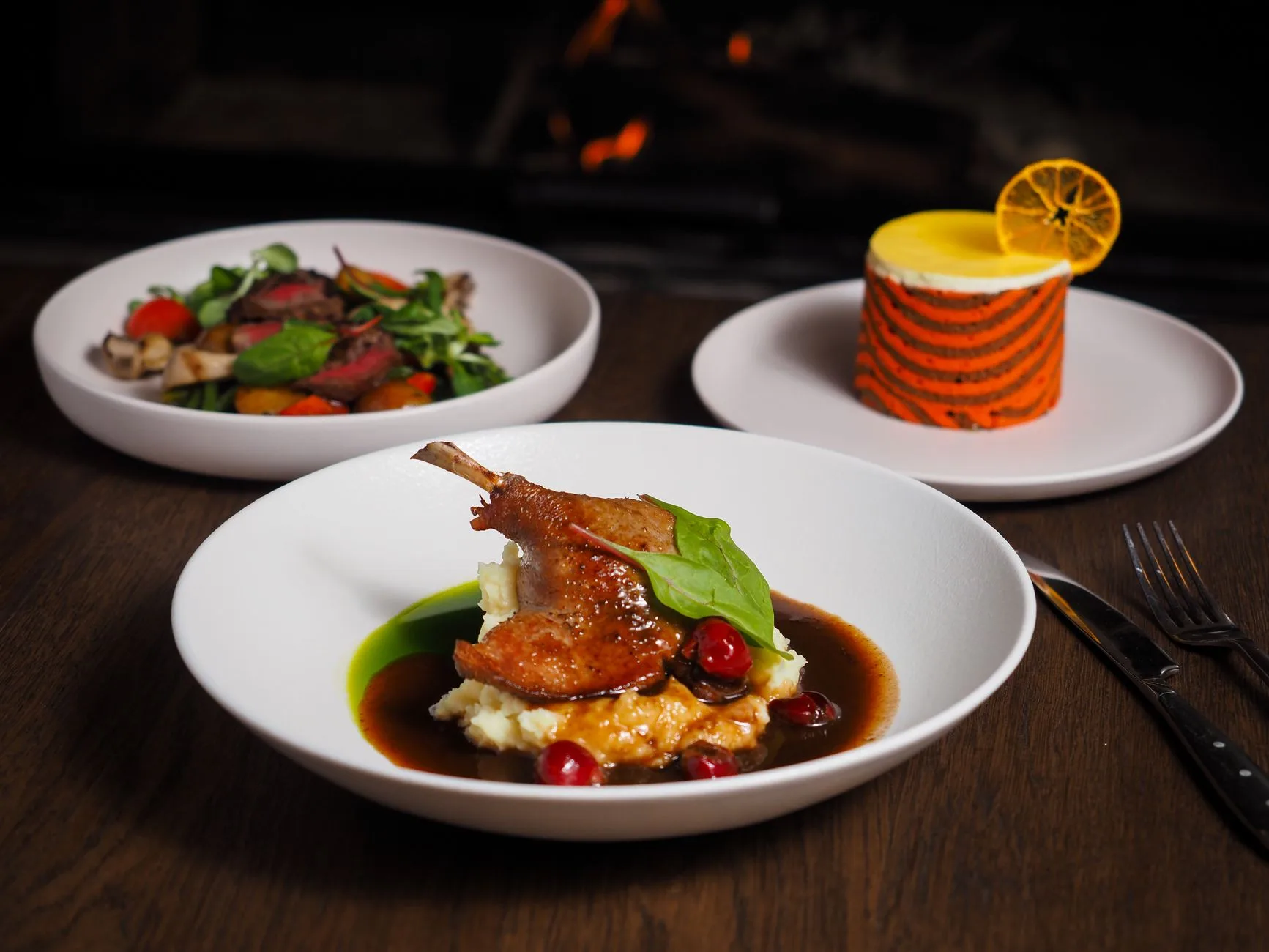
Photograph by Nadin Sh on Pexels
A single wine can cover three courses, but it cannot cover three unrelated meals. The useful question is not which bottle is universal. There is no such bottle. The useful question is whether the courses share a centre.
That centre might be a broadly savoury menu, a consistent level of richness, or a repeating ingredient such as herbs, roast flavours, mushrooms, nuts or shellfish. When each course points in roughly the same direction, one wine can stay convincing from the first plate to the last.
This is not about finding a clever compromise. It is about removing the sharp turns that make a wine look wrong.
Give the meal one direction
Think of a three-course meal as a sequence, not three separate pairing exercises. A fresh starter, a deeply smoky main and a very sweet dessert demand three different responses. No amount of expert bottle selection changes that.
Set a direction before finalising the dishes. For a white wine, that may mean a menu of clean, savoury food: a starter with fish, beans or a mild vegetable preparation; a main of poultry, pork, pasta or a firm white fish; then a final course based on fruit, pastry, nuts or mild cheese. The dishes do not need to repeat themselves. They need to feel as though they belong at the same table.
For a lighter red, move the whole menu a little further towards roasted and earthy flavours. A charcuterie starter, a mushroom or lentil course, and a main with roast meat or a structured vegetable dish can sit together. Keep the seasoning measured. The red does not need to dominate every course, but it should not arrive looking thin and metallic beside sharply pickled food or a blast of chilli.
Repetition helps. If thyme appears in the starter, let it reappear in the main. If toasted hazelnuts are used early on, a nut element later makes the sequence feel joined up. This is menu planning rather than wine lore, and it does most of the work.
Write the three dishes down before choosing the wine. Then circle the strongest flavour in each. If the circles point to sweetness, strong smoke, aggressive heat, bitter leaves, blue cheese and raw garlic all in one meal, simplify the menu. That is a better fix than searching for a miraculous bottle.
Choose restraint over distinction
For a whole meal, the best candidate is usually a wine with enough presence to remain interesting but without one feature that keeps demanding attention. Heavy new-oak flavour, firm tannin, overt sweetness, pronounced bitterness and high alcohol can all become tiring over several courses. They may suit one dish very well. They are less dependable across an evening.
A dry, medium-bodied white with moderate flavour and restrained oak is often the easiest starting point. It has enough shape for a substantial main course, yet it does not force the starter into a narrow lane. This is especially useful where the menu moves from seafood or vegetables to poultry, pork, grains or creamy pasta.
Dry sparkling wine can also do the job when the meal stays light and crisp. Its sense of freshness works well with salty, fried or delicate opening dishes, and it can continue through simply cooked fish or poultry. It becomes less useful when the main course is heavily browned, very rich or built around dark, roasted flavours.
A light red with modest tannin is the better route when the main course clearly needs red wine. It can begin with cured meats, mushrooms, roasted peppers or a vegetable tart, then carry on with duck, pork, lamb or a meat-free main based on lentils, beans or grains. Do not make its first job a raw, vinegary salad, and do not make its final job a sweet pudding.
The point is not to select the least interesting wine. It is to select a wine whose defining feature is balance rather than force. Save the dramatic, highly individual bottle for a meal designed around it.
Treat dessert as the boundary
Dessert is where the one-wine plan most often fails. A dry wine generally looks hard and austere after a genuinely sweet dish. That is not a minor mismatch. It changes the taste of the wine completely.
There are two sensible ways to deal with this. The first is to let the wine finish with the main course, then serve dessert with coffee, tea or water. There is no rule requiring the dinner wine to accompany every spoonful of pudding. Put the remaining wine aside rather than trying to force it through the final course.
The second is to make the third course less sweet and more in line with the meal. A plate of ripe fruit, a simple tart with limited added sugar, nuts, or a mild cheese course can make a gentler ending. This does not turn a dry wine into dessert wine. It simply avoids the most obvious clash.
Avoid a final course that is sweeter, colder and more intensely flavoured than everything that came before. Dense chocolate desserts, sticky fruit reductions and very sweet creams are clear signals to stop serving the dry table wine. They are not wrong; they just belong to a different plan.
Serve one wine properly
One wine carries a meal better when it is not served at the same temperature from beginning to end. A white can begin cool and warm slightly in the glass as the meal becomes more substantial. A light red benefits from being kept fresh rather than warm and slack. Put only part of the bottle on the table at first and keep the rest at the right temperature until it is needed.
Use normal-sized glasses and pour modestly. This gives the wine room to change as it opens, and it lets guests return to it with each course without facing a full, tired glass. If more than one bottle is needed for the number of guests, use the same wine rather than treating each bottle as a new pairing decision.
Keep the menu on one track, choose a wine with restraint, and let dessert mark the finish line if necessary. That is how one wine stops looking like a shortcut and starts looking like the plan.