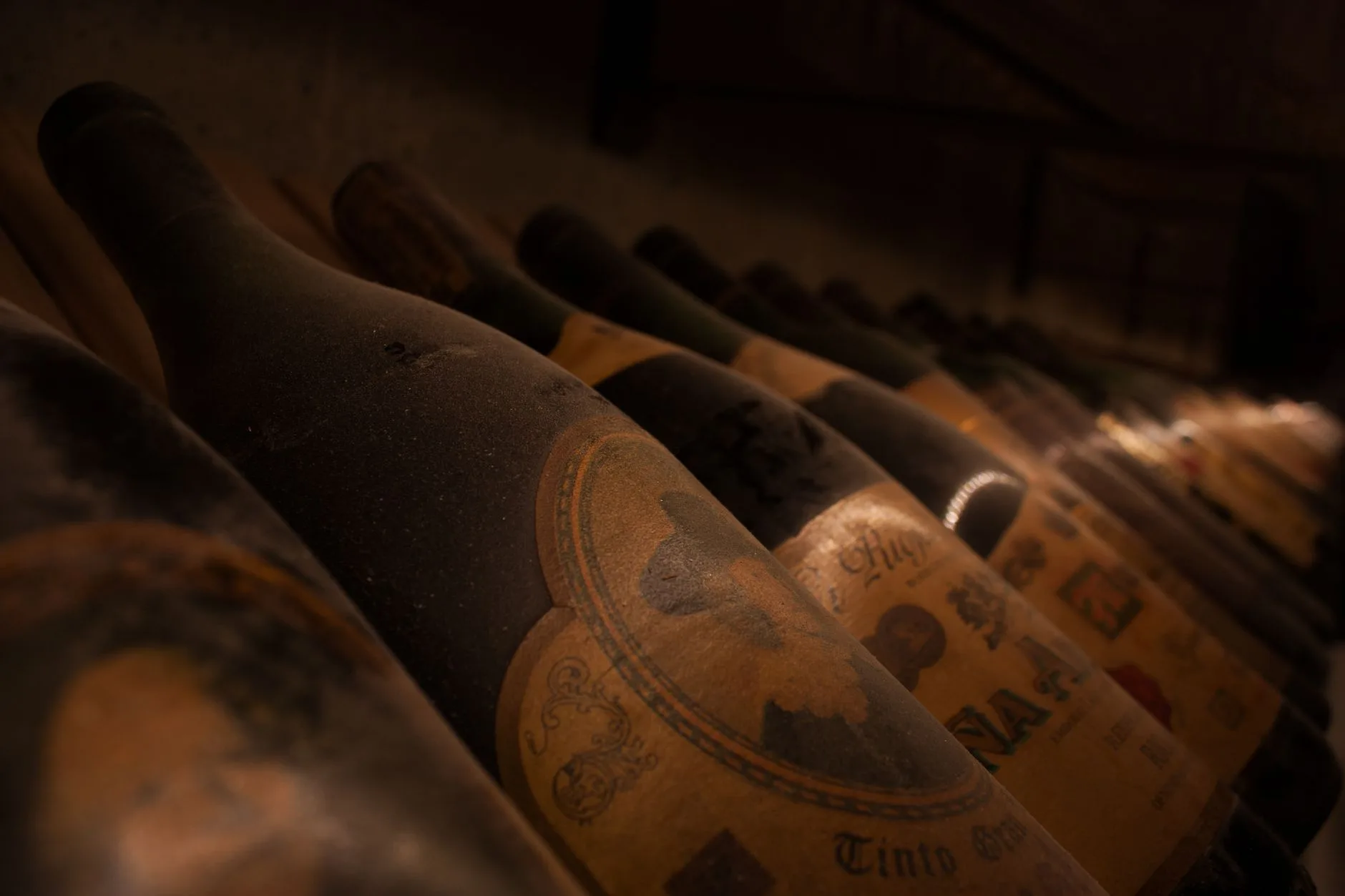
An old bottle with a clear history is not the same thing as an old bottle with no history. The label, name, year and fill level may look similar. The decision is different because the uncertainty is different.
Provenance means the bottle’s route through ownership and storage. It is not a decorative detail in a sale description. It is the evidence that helps a buyer decide whether a bottle has been looked after, moved repeatedly, altered, or simply left unexplained for too long.
Age is not proof of quality. Nor is an attractive label, a dark capsule or a wooden case. Before buying any wine with age on it, ask for a history that makes practical sense.
Ask where it has been, not just where it is now
Start with the most basic question: where has this bottle been since it was first bought?
The answer does not need to be perfect. Few private owners keep a complete diary of every case. But a credible account should be clear about the main stages. Was it bought on release and kept in one private cellar? Was it held in professional storage? Did it come from a restaurant, a merchant’s reserves, an inherited collection, an auction purchase, or several of these places?
“From a private cellar” is not enough on its own. It describes a source, not a history. Ask how long it was held there, whether the seller knows who owned it before, and whether it was purchased from another collection.
A long, calm ownership history is easier to assess than a bottle that has changed hands several times with no paperwork. That does not make every frequently traded bottle unsuitable. It does mean that each unexplained handover adds another gap.
Ask these questions in writing where possible:
- When and from whom was the wine acquired?
- Has it remained in the same storage location?
- If it moved, when did it move and why?
- Has it been bought at auction or from another private collection?
- Is there an invoice, storage record, purchase list or other supporting document?
A seller who cannot answer every question may still be honest. The point is not to demand a perfect archive. It is to notice the difference between an incomplete but straightforward account and a vague one that becomes vaguer when pressed.
Inspect the bottle as evidence, not decoration
Photographs and condition reports do not prove provenance. They can, however, show whether the physical bottle supports the story being told.
Ask for current, clear images of the bottle rather than relying on a catalogue image. The front label matters, but so do the capsule, neck, shoulders, cork area and back label. If the bottle comes in a case, ask to see the case as well, including any markings that identify it as original packaging rather than a later container.
Look for a condition description that says what is actually there. General phrases such as “excellent condition” are of limited use unless they are supported by detail. A useful description identifies label wear, capsule condition, signs of seepage, the bottle’s fill level, staining, or other visible marks.
Do not turn one detail into a verdict. An older label may be worn because it is old. A cleaner label may reflect careful handling, or it may mean nothing at all. The useful question is whether the condition is consistent with the account of storage and handling.
If the bottle is in an original case, confirm whether it has remained there throughout its life. If it is part of a larger group, ask whether all bottles came from the same source and were kept together. Mixed-source cases should be treated as mixed-source bottles, even when the labels match.
Keep copies of the photographs and condition notes. They are part of the bottle’s record after purchase, not just part of the decision before it.
Treat paperwork as useful, not magical
Documents are most useful when they form a chain. An original purchase invoice, followed by a storage record and then a sale record, tells a clearer story than any one sheet of paper on its own.
Ask what documentation is available and whether it relates to the actual bottle or case being offered. A general old invoice may show that similar wine was once bought. It does not necessarily establish the history of the bottle in front of you.
For wines sold in their original case, confirm the bottle count and whether the case has been opened. For larger formats, ask whether the bottle has been moved from its original packaging. For bottles with unusual labels, capsules or presentation, ask for detailed images rather than accepting a description of rarity.
Auction listings, merchant records and collection inventories can all be useful. They are records of a transaction or holding, not guarantees of what happened before that point. Read them for what they establish and for what they do not.
This is where many buyers make an avoidable mistake. They see a familiar name in a sale catalogue and assume the wine has been fully checked. A catalogue is a sales document. It may contain a condition report and source information, but it does not remove the need to read those details closely.
If the history has a gap, name the gap plainly in your own notes. “Owned before 2014 unknown” is more useful than allowing an appealing description to fill in the missing years.
Match the evidence to the level of risk
Not every bottle needs the same depth of investigation. The older the wine, the more substantial the purchase, or the less familiar the source, the more important it is to slow down.
Set a simple rule before looking at bottles: no purchase without a stated source, current bottle images and a condition description. For bottles with a longer or more complicated history, add supporting records and clear answers about each transfer of ownership.
Also decide what uncertainty is acceptable. Some buyers are comfortable with a partial history if the bottle is intended for opening soon. Others want a near-continuous record because the bottle is intended to remain in a collection. Neither approach is inherently wrong. Confusion starts when the evidence is weak but the expectation is high.
Record the source, date of purchase, documents received, bottle condition and any unanswered questions as soon as the bottle enters the cellar. Provenance does not end at purchase. The next part of the record is yours to keep.