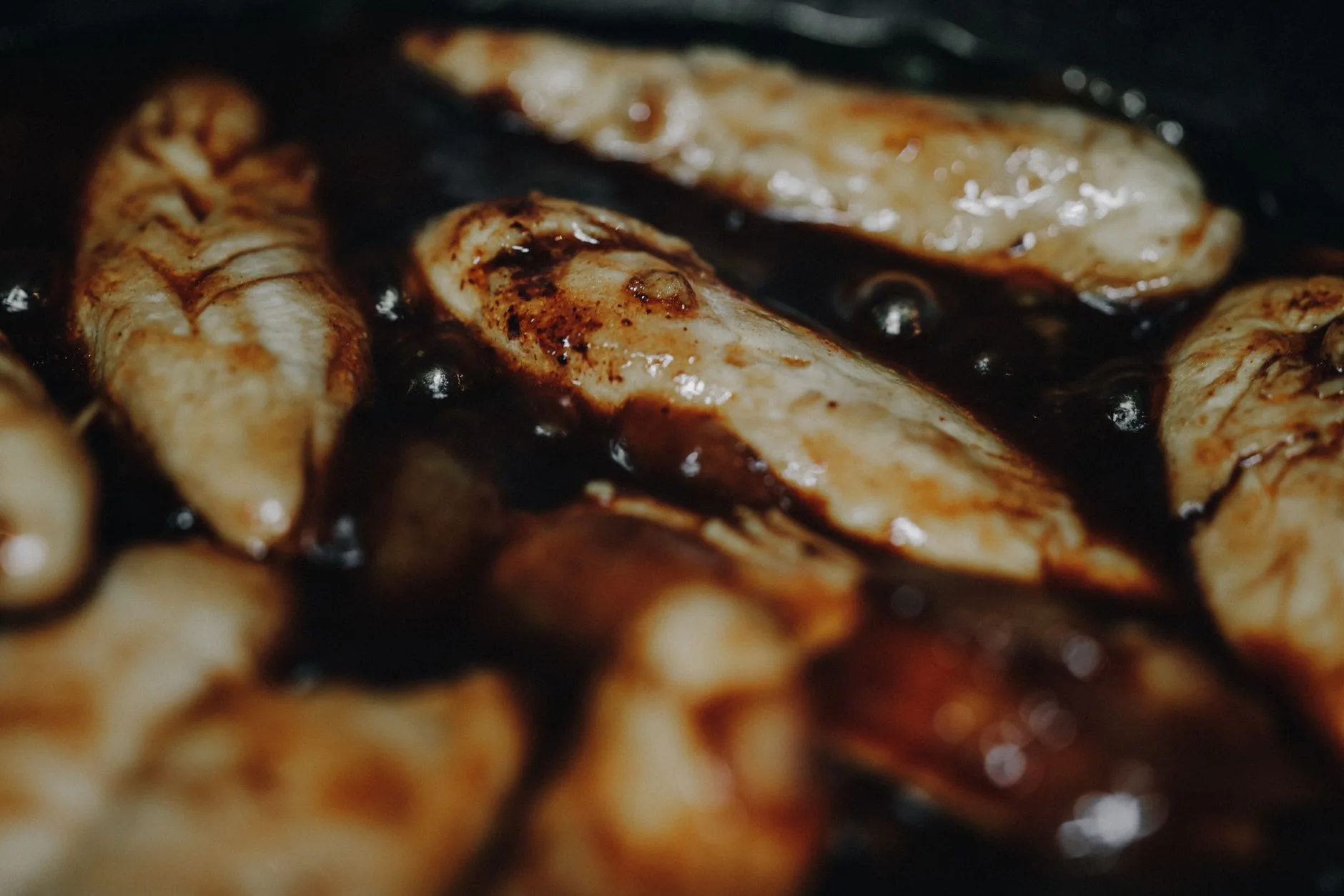
Chicken is not a wine-pairing category. It is an ingredient with a fairly quiet flavour. The sauce, seasoning and cooking method usually make the larger demand on the glass.
That is why a roast chicken with lemon and herbs, a chicken in mushroom cream, and a chicken braised with tomatoes can call for very different wines. The meat is the same. The dish is not.
This is not an argument for treating the sauce in isolation. Crispy skin, char from a grill, smoke, salt and sweet garnish all matter. But when a plate has a clear sauce, start there. It is often where the acidity, richness, heat, sweetness or bitterness sits.
Lemon, herbs and sharp dressings need freshness
Chicken with lemon, capers, vinegar, green herbs, yoghurt, or a sharp pan sauce asks for a wine with clear acidity and little obvious sweetness. A fresh dry white is the straightforward answer. The useful details are more important than the colour: keep the oak modest, the fruit clean and the alcohol restrained.
High acidity in the sauce can make a soft, low-acid wine seem dull. It can also make warm alcohol stand out. If the dish has a lemony sauce, a wine that is broad, heavily oaked or notably ripe may taste clumsy beside it, even if it seemed pleasant on its own.
For a plate built around lemon and herbs, look first at dry whites made in a crisp style. Whites based on sauvignon blanc, albariño, verdicchio, assyrtiko, picpoul or dry chenin blanc can all sit in this territory, depending on how they are made. The grape name is not a guarantee. Read for words such as dry, fresh, unoaked or stainless steel if that information is available, and avoid assuming that every example of a grape behaves the same way.
Rosé can work well here too, particularly when the chicken is grilled and served with a herb sauce or salad. Choose a dry, savoury rosé rather than one that tastes noticeably sweet. The point is to keep the sauce lively, not to cover it with fruit.
A practical check: taste the sauce before choosing. If it makes the sides of the mouth water, favour a wine that does the same. If it has a spoonful of honey, roasted garlic or sweet onion in it, move slightly toward riper fruit, but do not abandon freshness.
Cream and mushrooms need shape, not heaviness
Cream sauce changes the problem. It softens sharp edges and adds fat, which can make a very lean wine seem thin. The common mistake is to reach automatically for the biggest, oakiest white available. That can turn a chicken dish into a contest between butter, toast and alcohol.
The better target is a dry wine with enough body to register through the sauce, but enough acidity to stop the dish becoming flat. A white with some texture can work particularly well: chardonnay made in a balanced style, white Rhône varieties, dry chenin blanc with some breadth, or pinot gris that is dry rather than sweet. Again, the exact label matters less than the style. Look for a wine described as dry and textured rather than rich without qualification.
Mushrooms add another factor. Their earthy, savoury character can make gentle reds attractive, especially if the chicken has browned skin or has been roasted rather than poached. A light red with low tannin and good freshness can be more useful than a firm, dark red. Pinot noir and gamay are familiar routes, but the important instruction is simple: avoid drying tannin.
Tannin is the grip felt on the gums after drinking some reds. Cream does not always soften it as neatly as people expect, and mushroom sauces can make a tough red feel more austere. If the sauce is pale, creamy and delicate, a red should be light enough that it does not take over.
A practical check: consider the colour created in the pan. A pale cream sauce with a little tarragon points toward white. A deeply browned mushroom sauce, made from roasting juices and finished with cream, has enough savoury depth to allow a light red.
Tomato, peppers and spice change the wine completely
Tomato sauce brings acidity and, often, sweetness. Red peppers, onions and slow cooking can add more sweetness. Chilli adds heat. None of these elements care that the protein happens to be chicken.
With a tomato-based chicken dish, avoid high tannin as a first move. Tomato can make tannic reds taste harder and more drying. Instead, choose a red with moderate tannin, lively acidity and uncomplicated fruit. Barbera, sangiovese, grenache-based reds, lighter tempranillo styles and some gamay can be sensible categories to explore. The aim is not to find the darkest red. It is to find one that can meet the tomato without becoming bitter or metallic.
If the sauce is mainly roasted red pepper, paprika and olive oil, a dry rosé can be a strong middle ground. It has enough fruit for the pepper and enough refreshment for the oil. A lighter red can also work if the dish is served warm and has char from a grill.
Heat needs separate treatment. Chilli makes alcohol feel hotter and tannin feel rougher. A very dry, powerful red is therefore often a poor choice for spicy chicken, however well it fits the sauce on paper. Go for a lower-tannin wine with fruit, and do not be afraid of a little off-dry sweetness when the dish has real chilli heat. A lightly off-dry aromatic white can calm the sensation of spice better than a bone-dry wine. This is one of the few occasions where a hint of sweetness is a practical tool rather than a fault.
A practical check: distinguish paprika from chilli. Paprika may call for fruit and savoury depth. Fresh or dried chilli calls for lower alcohol, low tannin and, where needed, a touch of sweetness.
Use the strongest element on the plate
Sauce is the starting point, but it should not erase the rest of the cooking. Fried chicken with hot sauce has salt, fat, crunch and heat. A fresh sparkling wine or a bright, low-tannin still wine may work because it handles several pressures at once. Charcoal-grilled chicken with barbecue sauce has smoke, sugar and spice; choose fruit without heavy tannin, and avoid wines whose oak adds yet more sweetness and smoke.
For a simple weeknight decision, write down the sauce in three words before opening anything: lemon and herbs; cream and mushrooms; tomato and chilli; barbecue and smoke. Then choose the wine's main job: refresh, stand up to richness, or avoid amplifying heat.
That small step is more reliable than deciding that chicken always means white wine, or that a roasted bird automatically requires red. Put the sauce at the centre, and the choice becomes clearer.